



In three months, Popular by Design has already hit 300 subscribers! I’m thankful to everyone who clicked like, share, comment, or subscribe. It helps grow the newsletter without a financial contribution from anyone. Thank you for reading and suggesting things to write about.
Speaking of which, before we move to this month’s links, let’s do a little experiment. What should the next post be about? Since the most widely read post here so far was my personal notes about living in Japan, I’ll certainly write more about that, but I also promise to prioritize whatever gets the most votes below.
Here are the November links:
Alan Manning has a new book, “Why Immigration Policy Is Hard: And How to Make It Better.” I haven’t had a chance to read it yet, but it sounds exactly like what we’re trying to do here, so I may write a review soon.
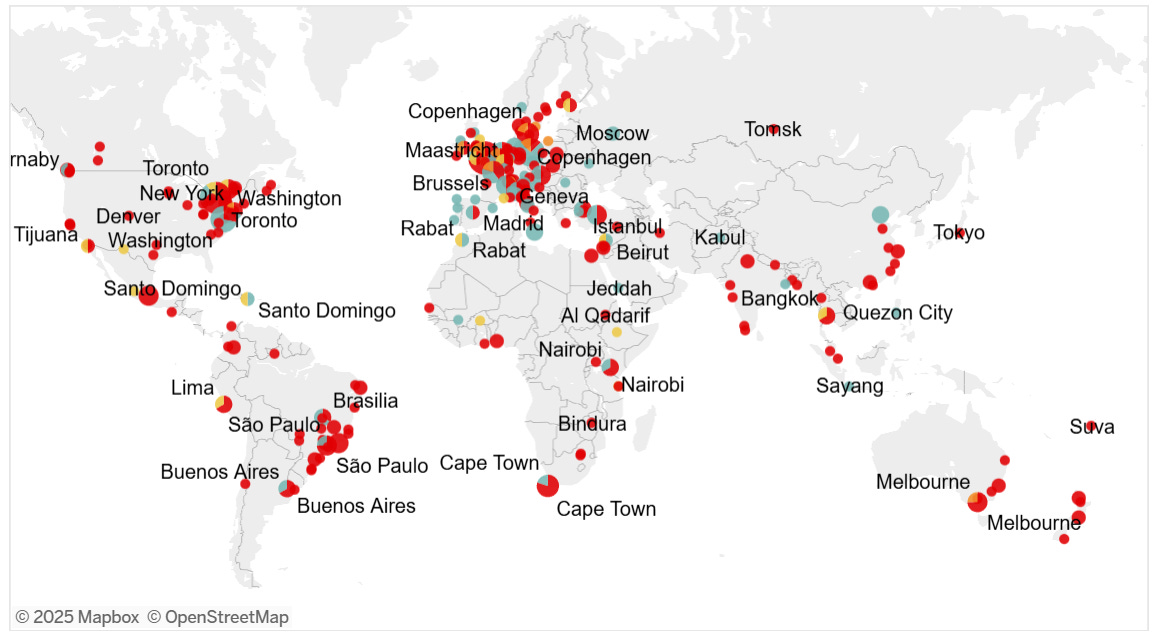
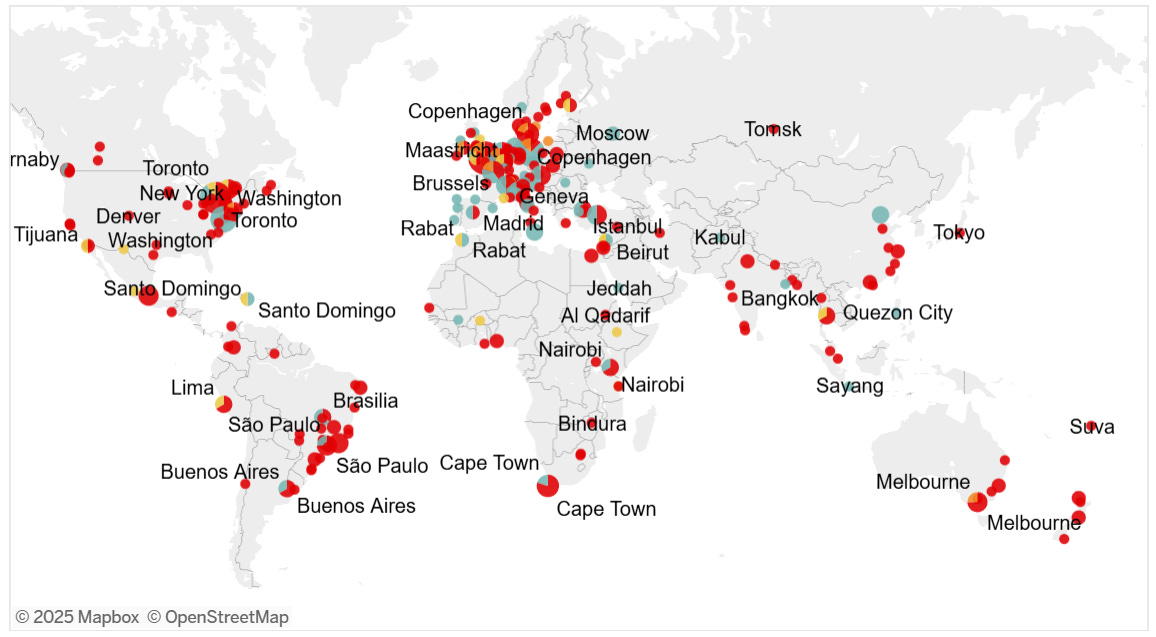
Lorenzo Piccoli at EUI just posted an updated interactive directory of basically all (!) 390 migration research institutions globally. Check it out!
Karolina Łukasiewicz with colleagues has a new special issue on the EU response to migration from Ukraine at the Journal of Ethnic and Migration Studies.
Philipp Lutz and Marco Bitschnau have a new paper showing that much of what is labelled “misinformation” about immigration, including the commonly reported exaggerated numbers, is really just bad guessing. More generally, people are not very good with percentages, and we can’t expect them to be knowledgeable about too many policy details.
David Broockman, Chris Elmendorf, and Josh Kalla have a new working paper showing that people oppose new housing not just because of self-interest, but because they genuinely don’t want others to live near ugly buildings. Because voters feel as strongly about buildings that are far away, the authors rightly call this “sociotropic aesthetic judgments” (also see Sam Bowman from Works in Progress talk about the same issue in the UK context).
I wonder how much of the so-called “cultural” concerns about immigration like hearing someone speak Spanish in the US are similarly sociotropic and about aesthetics.
Sean Westwood has a new PNAS paper, entitled “The potential existential threat of large language models to online survey research,” showing that LLM bots can now mimic human survey takers, fully and cheaply. This is not great if we want to know what actual voters think about immigration or other issues!
It looks like, in the face of LLMs, just as professors have to go back to in-person assessments to preserve the integrity of teaching, survey researchers may have to go back to in-person interviews to preserve the integrity of polling. As another possible solution, Yamil Velez just introduced Pulse, a “proof-of-life” approach that uses a simple finger-on-lens verification task to confirm human presence.
Marc Sabatier Hvidkjær offers a nuanced take on Denmark’s approach to accommodating far-right voters, recently explored at length by David Leonhardt, Cas Mudde, and many others in major outlets. Moderating on immigration can certainly work politically, but I worry that American pundits who keep writing about this often get lost in Danish political details and skip whether the policies are right on the merits.
I didn’t think it was possible to go viral on this platform, but my note on the varieties of populism (where a currently right-coded government department blamed all problems on illegal immigrants while a prominent left-wing politician blamed the same exact problems on billionaires) seems to have touched some nerve.
While there was broad agreement none of this is literally true, there was a common sentiment (especially among those left-of-center) that blaming billionaires is somehow not as bad as blaming immigrants. I don’t care what your politics is, but neither of the two original assertions is factually accurate or productive, even if you believe immigrants are a more sympathetic group with less power. You won’t solve traffic congestion or safety issues if you misdiagnose the problem by believing that’s all the fault of your outgroup.1
In this respect, Luis Garicano and Adam Brzezinski have an intriguing new paper documenting what they call “Narrative Entanglement” showing that, unlike economists, politicians tend to outright deny the existence of trade-offs. For example, EU “politicians who support climate action do not say: “This is an expensive but necessary survival strategy.” They promise it will save the planet and create millions of jobs.”
Gracia Liu-Farrer, Takeshi Miyai, and Yu Korekawa have a new Foreign Affairs piece on Japan’s “training-based approach to immigration,” offering a pragmatic blueprint for how to grow and integrate a migrant labor force without causing backlash.
Is immigration in the US good or bad? That may be the wrong question. It was a pleasure talking to Kelsey Piper about how to make immigration better instead for another great immigration piece on automating admissions from The Argument team.
Lauren Gilbert is starting a new magazine, aptly titled “In Development.” You can pre-subscribe now.
If you haven’t seen this yet, Alex Nowrasteh has a great new essay on Au Pair, sharing his personal experience participating in the program. The Au Pair program isn’t perfect, but it improves the lives of Americans and foreigners in clear ways. So it certainly merits more attention and study as a policy that could be scaled and sustained politically.
The good folks at Niskanen Center released a detailed county-level map of US immigration needs and a new report on reforming immigration, “Immigration beyond the extremes: A blueprint that actually works.” Self-recommending!
Incidentally, the worst “radical centrist” take I’ve seen come up a few times was that both populist accounts are true since it is “the billionaires who import immigrants to undercut Americans.”